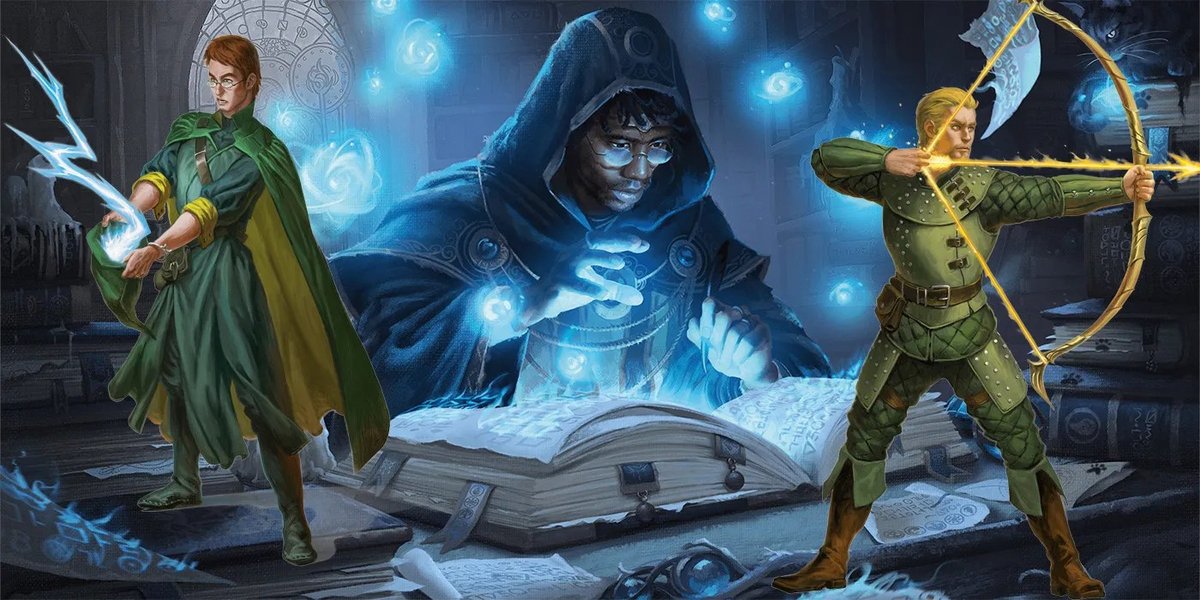
The allure of a gleaming +1 longsword or the promise of a cloak of protection is powerful for any Dungeons & Dragons adventurer. But for Dungeon Masters, balancing 5e treasure and magic items for campaign progression is less about the sparkle and more about the delicate dance of power, plot, and player satisfaction. Handing out too much too soon can shatter your carefully crafted challenges, while too little leaves players feeling unrewarded and underpowered. It's a fundamental part of keeping your campaign engaging and your challenges meaningful.
This isn't just about handing out cool stuff; it's about integrating powerful artifacts and humble trinkets into the very fabric of your world, ensuring they enhance the narrative and empower your players without breaking the game.
At a Glance: Key Takeaways for Balancing 5e Treasure
- Magic items are highly recommended: Despite being technically optional, they enhance gameplay, provide plot hooks, and excite players.
- They impact power levels: Items, especially numerical bonuses, make PCs more powerful, requiring DMs to adjust encounter difficulty or frequency.
- Balance with XP: Consider increasing encounter XP thresholds, adventuring day XP budgets, or running more encounters to account for boosted parties.
- Watch for "Christmas Trees": Too many permanent items, especially those with stacking bonuses, can make management difficult and characters overly resilient. Attunement is your friend.
- Trading is Tricky: Establish clear rules and introduce complications for buying/selling magic items to prevent unintended power accumulation.
- Items as Story Tools: Use descriptions, lore, and even curses to make items more than just stat bonuses – integrate them into your world.
- Fix Problems with Items: Thoughtfully award items to address character dissatisfaction, correct party imbalances, or compensate for missing party capabilities.
The Undeniable Impact of Magic: Why Items Aren't Just Flavor
In Dungeons & Dragons 5th Edition, magic items aren't just shiny baubles; they're potent game changers. Their presence significantly impacts Player Character (PC) power, directly influencing XP thresholds for encounters and the overall adventuring day XP budget. Think of it this way: a party armed with magic items is inherently more powerful than a party without them, even if their character levels are identical.
Consider items that grant bonuses to attack rolls, armor class (AC), damage, save difficulty class (DC), or saving throws. These numerical boosts have a tangible effect. Weapon-dependent classes like Fighters or Paladins benefit immensely from attack and damage bonuses, often more so than spell or feature-reliant classes like Rogues or Wizards, who might gain more from items that expand their utility or spellcasting options. It's also worth noting that not all bonuses stack; typically, attack roll and saving throw bonuses are mutually exclusive from different sources unless explicitly stated.
The impact can be substantial. Analysis shows that for standard magic items, a party's encounter XP might need to increase by at least 50% to shift an encounter's difficulty by a full category (e.g., from Medium to Hard). That's a significant bump to achieve consistently. Moreover, the effects of these bonuses aren't static; they tend to have a larger impact at higher levels, where the margins for success or failure become thinner and every +1 counts more.
Adjusting the Dials: How DMs Can Account for Increased Power
When your party starts accumulating magic items, you, as the Dungeon Master, have a few practical ways to maintain a balanced challenge without constantly redesigning every monster stat block. These methods allow you to scale difficulty dynamically:
- Increase the Party's Encounter Difficulty XP Thresholds: The simplest method is to directly adjust the XP values that define "Easy," "Medium," "Hard," and "Deadly" encounters for your group. If your party feels stronger, you can treat them as if they're a level or two higher than they actually are when calculating encounter difficulty. This subtly boosts the XP required for each difficulty tier, making "Medium" encounters feel more challenging.
- Increase Their Adventuring Day XP Budget: Beyond individual encounters, magic items extend a party's overall endurance. You can increase the total XP value your party is expected to overcome in a typical adventuring day by calculated percentages. This means they'll face more or tougher encounters before needing a long rest.
- Maintain Current XP Thresholds, But Run More Encounters: If adjusting XP values feels too abstract, a more concrete approach is to simply increase the number of encounters. As a general guideline, a party progressing with a healthy complement of magic items could reliably handle an additional Medium encounter in Tier 2 (levels 5-10), an additional Hard encounter in Tier 3 (levels 11-16), and even an additional Deadly encounter in Tier 4 (levels 17-20). This stretches their resources and forces tactical decision-making over a longer period.
The Art of Awarding Treasure: Beyond Just Rolling on a Table
Magic items are technically optional in 5th Edition, but they are highly recommended. They are flexible, interesting, and impactful rewards that provide crucial plot hooks, weave into existing lore, and generate genuine player excitement. So, how do you award them effectively?
For raw guidance on item distribution, you can always consult the Dungeon Master’s Guide (specifically the Random Treasure tables) or Xanathar’s Guide to Everything (pages 136-137, "Awarding Magic Items"). These resources offer frameworks for appropriate treasure progression by challenge rating and tier.
A smart strategy is to heavily utilize expendable items like potions, scrolls, and single-use wondrous items. These treasures expand character options, provide crucial clutch moments, and offer temporary power spikes without causing long-term balance issues. A potion of healing can save a life, and a scroll of fireball can turn the tide of a battle, but once used, their power is gone, leaving no permanent numerical bonus to factor into future encounters. When you're thinking about what exciting loot to drop next, consider using our 5e loot generator to spark inspiration for both permanent and consumable items that fit your campaign's needs.
Navigating the Pitfalls: Common Challenges and Smart Solutions
Even with the best intentions, managing magic items can present several challenges. Knowing these pitfalls and having ready solutions can save you a lot of headache down the line.
Challenge 1: Numerical Bonuses Making Encounters Too Easy
A +1 weapon here, a +1 shield there, and suddenly your goblins are pin cushions, and your ancient dragon feels like a house cat. Numerical bonuses are the quickest way to unbalance your game if not accounted for.
Solution:
- Treat the party as 1 or 2 levels higher: This is a simple mental adjustment. When calculating encounter difficulty, use the XP thresholds for a party one or two levels above your PCs' actual level. This effectively makes standard encounters a bit tougher without changing monster stats.
- Slightly increase monster Challenge Ratings (CRs): For individual encounters where you feel the party has a significant advantage, you can subtly pick monsters with a slightly higher CR than you normally would, or add an extra low-CR minion.
Challenge 2: The "Christmas Tree" Problem (Too Many Items)
Characters adorning themselves with an item in every slot, from a ring of jumping to a belt of hill giant strength and three different wondrous items, can lead to cluttered character sheets and a nightmare for tracking abilities.
Solution:
- Lean on Attunement: This is 5th Edition's primary limiting factor. A character can only be attuned to three magic items at a time. Emphasize this rule. Items that require attunement are typically more powerful, and choosing which three to attune to becomes a meaningful strategic decision for players.
- Official Guideline: Remember that official rules anticipate a character accumulating about 6 permanent magic items by level 20. This is a far cry from a full "Christmas tree" of gear. Adventurer's League, for example, has specific limits based on character tier (e.g., Tier 1 characters can have 1 item, while Tier 4 characters can have 10, excluding common, consumable, or story items). These guidelines give you a sense of scale.
- Award fewer permanent, more consumables: As mentioned, expendable items are your friend. They offer short-term boosts without contributing to the "too many items" issue.
Challenge 3: Stacking Bonuses (Overly Resilient PCs)
When multiple items provide similar numerical bonuses (e.g., several sources of +AC, or items boosting multiple saving throws), characters can become overly resilient, effectively immune to certain types of damage or virtually unhittable.
Solution:
- Avoid awarding numerous stacking items: Be mindful of the items you introduce. If a character already has a cloak of protection (+1 AC, +1 saving throws), think twice before giving them another item that offers a similar passive numerical bonus.
- Consider a house rule for numerical bonuses: While the core rules specify how bonuses stack (or don't), you might implement a house rule that numerical bonuses from magic items, apart from explicitly defined situations like armor and shields, don't stack with each other. For instance, if a character has a ring of protection (+1 AC) and a cloak of resilience (+1 AC), they only get the benefit of one +1 to AC from magic items. This simplifies things and prevents unforeseen power creep.
Challenge 4: The Magic Item Marketplace (Trading & Acquisition)
Players will inevitably want to buy, sell, or trade magic items. While this can be a fun aspect of the game, it also carries the risk of characters accumulating too much power by simply buying whatever they need.
Solution:
- Make trading challenging: Magic items are rare and powerful. Their acquisition should reflect this. Simply walking into the local "Magic Mart" and buying a flame tongue sword should be a significant event, not a routine shopping trip.
- Xanathar’s Guide to Everything (page 126, "Buying A Magic Item") offers concrete rules for this. It suggests roll-based systems to determine availability and a process that takes time.
- Availability Scale: Use the 5-tier scale: Private Sale, Public Exchange Forum, Local Dealers, Competing Dealers, Trading Network. Adjust item availability (e.g., by modifying dice rolls) based on how rare or common such items are in your setting and which tier of availability the players are attempting to use. A small village will have almost no market, a major city might have Local Dealers, and only a truly cosmopolitan hub might have a full Trading Network.
- Pricing: Magic item prices are arbitrary by design, allowing DMs to set them based on campaign needs. Justify prices with lore.
- Lore Justification: Why is this item so expensive (or cheap)? Is it historically significant? Does it have bad associations? Does it possess unique, hard-to-replicate traits? Is it from a vanished culture?
- Market Rates: Tie prices to local supply and demand. In a magic-rich setting, items might be cheaper. In a magic-scarce land, even a potion of healing could be exorbitant.
- Gold Accumulation: Be aware that at higher levels, PCs accumulate significant gold (over 300,000gp by level 20 is common). This gold can easily translate into purchasing multiple powerful items if not managed, so the difficulty of finding items for sale is often more important than the gold cost itself.
- Complications during purchase attempts: To add flavor and deter casual shopping, introduce complications. Have the player roll a d4; on a 4+, a complication occurs. This could be a cursed item, a theft attempt, an assassination plot, or a rival buyer. Increment the roll for subsequent attempts (e.g., d4, then d6, then d8) until a complication happens, then reset it. This makes item acquisition an adventure in itself.
Beyond the Stats: Making Magic Items Memorable and Meaningful
A magic item isn't just a number; it's a story waiting to be told. The most memorable items are those that have personality, history, and a place within the campaign's lore.
Give Them Description and History
Don't just say, "You find a +1 longsword." Describe it! Use the tables in the Dungeon Master’s Guide (pages 142-143) for inspiration. What kind of creator made it? What's its history? Is it made of strange materials? Does it have peculiar quirks?
- Example: "The longsword hums faintly with an inner warmth, its blade a dark, swirling steel like a storm cloud, always appearing slightly damp despite being dry. A single, stylized raven's feather is etched into its pommel, hinting at a lost elven smith who walked with the spirits of the air."
Integrate Them as Story Devices
Magic items are perfect for world-building. Connect them to your setting's lore, historical events, famous figures, or cultural craft traditions.
- Example: An item found in a sunken ruin might be made with strange, smooth obsidian, emitting faint psionic pulses, implying it dates back to an ancient aboleth era. This item isn't just powerful; it teaches players about the world's hidden past.
Use Them as Expository Devices
NPCs, especially traders or sages, can be excellent conduits for revealing an item's history or origin. They can provide exposition about a forgotten civilization, a legendary hero, or a unique magical practice.
- Unreliable Narrators: You can even use NPCs as unreliable narrators. Perhaps a merchant spins a grand, exaggerated tale about a common magical trinket, or a cursed item comes with a seemingly benevolent, but ultimately misleading, origin story. This adds depth and encourages player investigation.
Don't Shy Away from Curses
Dungeon Masters often underutilize curses, but they are incredibly potent tools for engagement. Minor but impactful curses add interest, make players think twice about collecting too many items, and can even be prevalent on purchased items (tying back into acquisition complications).
- Example: A magnificent amulet of health might grant +2 Constitution, but it also compels the wearer to always speak the absolute truth, regardless of social consequence. A belt of giant strength might occasionally shift the wearer's skin to stone, stiffening their movements at inconvenient times. Curses aren't always debilitating; sometimes they're just inconvenient, but they always add character.
Magic Items as Problem Solvers: Improving Your Game with Thoughtful Rewards
Beyond just balance, magic items are fantastic tools for you, the DM, to subtly guide the campaign, address player concerns, and fill narrative gaps.
Address Character Dissatisfaction
If a player expresses frustration with their character's performance or a lack of options, a specific magic item can be a perfect solution. Award an item that enhances their desired playstyle or expands their capabilities in areas where they feel limited.
- Example: A Champion Fighter feeling a bit bland might find a weapon that grants additional critical hit benefits, emphasizing their core class feature. A Barbarian with no social skills might discover an Alchemy Jug, giving them a fun, if chaotic, way to interact with the world by producing various liquids.
Correct Party Imbalance
Sometimes, one player's character simply isn't pulling their weight, leading to dissatisfaction for that player. Instead of direct buffs, award a specific item that uniquely benefits their character, ideally in a way that makes it less likely to be traded away.
- Example: If a Wizard is feeling overshadowed, a Wand of the War Mage +1 (or a more unique class-specific item) can make a huge difference. Consider having an NPC gift the item, ensuring it feels personal and less like general loot for the party.
Compensate for Missing Capabilities
Every party has gaps. Instead of forcing players to multiclass or create specific characters, magic items can organically fill these voids, making the party more robust and versatile.
- Example:
- No Healer? Abundant potions of healing or an Alchemy Jug (for creating antitoxin/acid) can keep the party alive.
- No Magic Dispelling? A Dispelling Stone (a one-use item that casts dispel magic) or a Staff of the Adder (for animate objects in a pinch) can bridge the gap.
- Lack of Mobility? A flying carpet or wingwear can solve issues with reaching inaccessible locations, or even boots of striding and springing can enhance movement and exploration.
- Low Charisma? A circlet of persuasion or a cloak of elvenkind (for stealthy infiltration) can help the party bypass social obstacles.
Your Next Steps for a Seamlessly Balanced Campaign
Balancing magic items in D&D 5e isn't about rigid adherence to a formula; it's an ongoing conversation between you, your players, and the unfolding story. The key is to be intentional, flexible, and always ready to adapt.
Start by being mindful of the numerical impact, adjusting your encounter design as needed. Don't be afraid to embrace attunement and expendable items as crucial balancing tools. Most importantly, weave your magic items into the narrative tapestry of your world. Give them history, personality, and purpose. Use them not just to empower, but to tell stories, introduce complications, and address the specific needs of your campaign and your players.
Remember, you are the final arbiter of your world. Experiment with these guidelines, observe your players, and fine-tune your approach. With a thoughtful strategy, your treasure will truly enrich your campaign, making every discovery feel meaningful and every challenge exhilarating.